Statement for the American Diabetes Association

As a soloist for the New York City Ballet, I feel the immediate effects of my blood sugar levels. The connection dancers feel with their bodies is vital to the success of a performance. If my blood sugar was unbalanced, I would not be completely in tune with my body and would risk the performance.

Even today in my many roles as a diabetes advocate, public speaker, ballet teacher/coach/repetiteur for the George Balanchine Trust and author, I need to have complete focus. My clarity, drive and focus ― which make my work meaningful and successful ― are dependent upon my blood sugar levels being stable.

As hard as I work and as dedicated as I am towards maintaining my blood sugar levels, they still fluctuate. Although I have managed to get my blood sugar under control for the most part, I still fear the long term repercussions of diabetes.

I want to stop diabetes because I want to lead a full and passionate life without the constant fear and concerns that this disease presents every day.

Visit The American Diabetes Association

10 Tips To Connect With Your Body

10 Tips To Connect With Your Body When Diagnosed With Illness

I am a former ballerina with the New York City Ballet, and presently a public speaker, movement motivator, ballet teacher, and repetiteur for the George Balanchine Trust. When I was diagnosed with diabetes in my third year in the company, I thought my career was over.

I had always thought of myself as a positive person. As a hard worker, I could see the positive results in ballet. After my diagnosis my positive perspective basically went out the window. It didn’t happen right away; at first I was convinced I could conquer my diabetes with my dancers discipline.

But after being mis-diagnosed twice and struggling with my prescribed insulin doses, I found balancing my diabetes was not as predictable as balancing on my pointes. Once I eventually learned how to dance with diabetes, my next struggle was internal. Was this a suitable career for an insulin dependent diabetic? Thankfully, I didn’t give up, and six years after my diagnosis I was promoted to soloist ballerina and would go on to perform for a total of sixteen years.

1. Know what the facts are.

Educate yourself as much as you can about your situation. There are so many emotions involved, and I am one for allowing yourself to experience them, but you need to know the facts. I was positive and determined to overcome my situation, but being mis-diagnosed sent me on the wrong path and I went astray. It took me years to understand the type of diabetes I had and it was many years before I figured out how to dance on insulin and manage my diabetes successfully. It is true that knowledge is power.

2. Come out of denial.

Be gentle with yourself, allow for shock and grief, anger and fear, whatever emotions you feel. But again, use your intellect to make decisions that can help you get the right care. Denial can help keep you motivated and positive, but it needs to end or it can lead to ignorance. I believe I stayed with a doctor who gave me the wrong advice because I was still in denial, and a part of me wanted to believe his improper diagnosis.

3. Communicate.

Because my blood sugar levels were often elevated, it was difficult for me to have clarity. I had trouble speaking up to authority figures based on my childhood experiences and was intimidated by my doctor. Therefore I was not able to ask the right questions or explain my concerns and difficulties. At work I was also afraid of telling my directors, Jerome Robbins and Peter Martins, what was happening to me. I didn’t communicate with my doctor or my directors, and tried to do it all on my own. This made my journey all the more isolating and difficult. Find a doctor you can trust and become a partner with them.

4.Take responsibility for your health.

We have to know and believe we are worth it– that our lives have meaning. It is up to each of us to be our own cheerleader. Become interested in the process and investigate the right components for success. Doctors do not always have all the answers. I have always been passionate about physical and emotional well -being. I enjoy discovering the best way to eat for my body and how to work with my personal psychology. Your journey to optimal health can and will be a journey of self-discovery.

5. Work with your body.

I was angry with my body for failing me and saw my body as the inadequate enemy ruining my life. When I learned to see my diabetes as a child, one I needed to nurture and take care of rather than yell at, I finally learned how to be on my own team.

6. Breathe.

There are many different breathing techniques. Start by being aware, slowing down and noticing your breath as it goes in and out. Try to inhale, filling your lungs with air, and then on the exhale slowly allow the air to seep out. Picture a feather gently floating to the ground.

7. Move Freely.

Besides more vigorous exercise, spend some time doing gentle stretch like movements. Find a comfortable, position whether it be sitting or lying down, and picture the waves in the ocean. Allow your torso to gently rock back and forth, twist and curve in any way that feels comfortable. Keep breathing.

8. Eat well for your body.

We all know that healthy foods can satisfy us physically as well as emotionally. Learn how to love eating healthy by finding alternatives to unhealthy foods you crave when you are stressed. I ask myself what texture I am craving; creamy, salty, crunchy, fatty or sweet and then pick the healthiest food that will satisfy that need. Not only do my blood sugars stay balanced, my cravings and my emotions calm down.

9. Release held Emotions: Going Deeper.

Learn how to deal with daily stress and deeper emotions. Rather than holding them in, transform them. If you are particularly stressed take some time to feel what is going on emotionally inside of you. It may help to journal, talk to someone, or simply breathe. Giving yourself permission to relax is extremely important.

10. The Dance Within.

The passion and freedom of spirit I experienced early in my life became my reference for the future. No matter what I’m doing, whether it’s mundane or extraordinary, there is a constant dance within me that connects and engages me to the world around. Find your own dance and keep it close to your heart.

I believe when we practice tools to connect with our selves we will be better able to maintain balance despite the chaos around us. I want us all to live full, healthy, and vibrant lives, where dreams are realized, and potentials and passions fulfilled. I believe this is possible, even with a chronic illness as I am experiencing. I believe it starts within.

When Diabetes Happens… to a Prima Ballerina!

At age 15, I left my home in Los Angeles and moved to New York City to study at the School of American Ballet, the official School of the New York City Ballet. By age 18, I was a full member of the famed NYC Ballet, rehearsing all day and performing every night.

In just my second year in the company, I was singled out to dance the leading role in the Nutcracker, the Sugarplum Fairy. The following year I was again singled out to dance a lead in a new ballet. It was an incredibly exciting time for me, but also a very exhausting one. Dancing all day and performing every night, I ignored the strange symptoms I was experiencing in my body.

I thought I was feeling thirsty and hungry, spaced out, urinating frequently, and losing weight because of the intense schedule and my nerves for the big premiere. I didn’t think anything was really wrong. I would have continued to ignore my symptoms had it not been the sores under my arms that threatened my performance, my dancing.

With so many different ballets I performed, I wore different costumes made for different bodies which rubbed under my arms. The sores eventually became infected and antibiotics did not heal them. It was terribly painful to lift my arms, which ballerinas do a lot, not to mention how unattractive it was. I was often dizzy and I found it hard to feel my extremities, particularly my toes, when I danced.

My diagnosis was informal and cold, with little information besides all the horrific things that would happen to my body in the future. I sat in that office and was handed pamphlet after pamphlet about diabetes and its terrifying complications. From heart disease and stroke, to blindness, kidney failure and loss of limbs.

All I could think about was getting back to the theater. I left the office confused and annoyed. Back at the theatre, I convinced myself the blood work was off because of my exhaustion or a lab error. I was a 21-year-old aspiring ballerina with the New York City Ballet. A disease people give money to for charity had nothing to do with me.

I was clearly in denial, fueled by the fact that because of my age, doctors assumed I was type 2 and I was put on oral medication. Even though I didn’t want to accept it, type 2 diabetes meant I could reverse it. With my dancers discipline, I set out to perfectly control everything I ate while exercising all day. This actually worked for a time; unbeknownst to me I was still in the honeymoon phase of type 1 diabetes.

Everything came crashing down when the honeymoon phase ended. No matter how perfect I was, I could not keep my sugars down. Going on insulin felt like the ultimate failure. I hated my body for its inadequacies. I felt hopeless at the thought of how I would juggle shots of insulin with my performance schedule.

The beginning was extremely difficult as I tried to maintain tight control while performing. I was afraid of the long-term complications, inexperienced with how much insulin to take at any given time before dancing, and unaware of the immediate danger of lows. Needless to say I had many harrowing experiences on stage.

I should have discussed my difficulties with my doctor, but instead found a new one. The new doctor also thought I had type 2 diabetes and took me off insulin. He even told me to stop using my meter. He thought the lows on stage were far more dangerous than letting my sugars go up a bit. He thought I was being obsessive. Could he have been right?

It’s hard for me to understand how I convinced myself it was okay to let my blood sugars go high. I was still hoping the whole thing would go away or would reverse itself. I was listening to my doctor so I was clearly still in denial, happy to put the meter away and stop my shots. It didn’t take long for my original symptoms to return.

My denial was so great, and my conviction to never go back to shots of insulin, I never thought to check my blood sugar. I think dancing all day and night, and eating as perfectly as I could, is how I survived with no insulin for almost a year. But I looked and felt terrible. Even though the company still let me dance in the corp de ballet every night, there were no leading roles coming my way.

When I finally “woke up” and checked my blood sugar levels, the meter would not go that high. It was time to end my denial, take responsibility for my body, and accept my insulin-dependent diabetes.

I started a balanced insulin program and began looking and feeling better. Ironically, as I learned how to perform every night without experiencing extreme lows, I also psychologically started to question the reality of my situation.

Was this a suitable lifestyle for a person with type 1 diabetes? Maybe I was putting too much pressure on myself. I was exhausted from all the ups and downs with my physiology and from trying so hard to prove I was the same promising dancer I once was. I was not the same. Maybe it was time for me to admit I had accomplished a lot, but it was time to find a more suitable lifestyle for an insulin-dependent diabetic.

As much as I wanted to quit dancing, I just could not let myself do it. When I listened to the small voice in my heart, I admitted to myself that if I quit, I would be using diabetes as an excuse. The truth is I was more tired about wishing I could be the dancer I once was, alive and joyful, than I was tired of diabetes.

I told myself I hadn’t yet danced on the right insulin regime for long enough and didn’t know what was possible. I did not want to look back with regret. I knew I would always wonder, so I had to stay and keep trying.

Nine years after I joined the company (six years after my diagnosis), I was promoted to Soloist Ballerina of the New York City Ballet. I performed with the company another 7 years, 16 years total with the company and 13 with diabetes.

I loved every performance and am grateful for every moment I had on stage. Today I am a teacher and I stage George Balanchine ballets all over the world. Another passion of mine is to motivate people to take care of themselves. Through my story I hope to motivate others to take care of their bodies, their health, and also follow their dreams.

This article and many other encouraging stories can be found on Diabetes Mine.

Dancing Through Diabetes

A New York City Ballet soloist describes her successful fight to keep diabetes from destroying her artistry and her career.

I became an apprentice at New York City Ballet in the fall of 1983, shortly after the death of George Balanchine. By the following year I was a member of the corps de ballet. To my incredible surprise, ballet master in chief Peter Martins gave me the role of the Sugar Plum Fairy in The Nutcracker in only my second year with the company.

The following year I was featured in his new ballet, Les Petit Riens. These roles came in addition to many wonderful corps and demisoloist roles that I was regularly performing during our fourteen-week winter season. It was an extremely exciting time for me, and yet a very hard one. Strange things had begun to happen to my body.

First, there were sores that would not heal under my arms, where the costumes rubbed. As the premiere of Riens approached, my body was feeling more and more foreign to me. I was often dizzy, and I was finding it hard to feel my extremities, particularly my toes, when I danced. I could sense Peter’s growing frustration with me as I kept falling off pointe for no apparent reason. Increasingly frustrated, I was angry at my body for falling apart at this most important point in my career.

In addition to the sores, I was losing weight, feeling thirsty and hungry all the time, feeling spaced out, and urinating frequently. It didn’t occur to me that anything was really wrong. Rather, I thought I was extremely tired, maybe from pushing too hard. Then, in the midst of a six-hour rehearsal day, with a performance that evening, I was called to my doctor’s office.

I had juvenile diabetes, a disease that would radically change my daily life and the course of my dancing career. At first I wanted to deny what I had been told. I thought that there must be some mistake; the lab had made an error; this condition was just a passing phase.

My doctor was giving me pamphlet after pamphlet about diabetes and its terrifying complications. I knew nothing about diabetes or what it would mean to me. All I could think about was that I had to get back to the theater and prepare for that evening’s performance.

When I returned I didn’t tell anybody what I’d found out. I was panicked about the disease’s effect on my dancing. I knew how important it was to look strong and consistent if I wanted to keep getting lead roles. Peter had already told me that the main thing I must do was strengthen my technique. So I feared looking weak. I needed to hide what was happening to me.

There are two types of diabetes, I learned from those pamphlets: juvenile and adult-onset. They are actually very different diseases. The type I have, juvenile diabetes, or Type I, accounts for only 5 to 10 percent of diabetics. It is believed to be an autoimmune reaction in which the beta cells of the pancreas are destroyed, leaving the body unable to make insulin, a hormone.

Insulin’s job is to open these cells much as a key opens a door. This way the cell can receive its nourishment from the food that we eat, and the cell can work properly. Without insulin, the food, now in the form of sugar, or glucose, remains in the bloodstream (hence the term, “high blood sugar”), and the entire body suffers.

Adult-onset, or Type II, diabetes also leads to high blood sugar, but not because such diabetics lack insulin. In fact, they have plenty of it. However, what they do have is not being properly utilized. Both types of diabetics must concentrate on getting blood-sugar levels down and getting nourishment to the cells.

You see, people don’t die from diabetes; they die from complications that develop after years of high blood sugar. Diabetes is the leading cause of blindness and kidney failure; it can cause nerve damage that requires amputation, and it greatly raises the risk of heart disease and stroke.

Eventually I did tell the company, but I have never let them see what I’ve had to go through to stay in performing shape. Educating myself about the disease and how to live and dance with it became my obsession.

I needed to learn about insulin injections, monitoring blood-sugar levels, and exploring different diets. Since diet has such a profound effect on insulin levels, I experimented with many different ones to find how each affected my insulin dose.

I tried macrobiotics, an ayurvedic diet, Chinese herbs, and vitamin therapies, along with diets involving high protein, high fat, juices, and raw food, among others. And while I have never adhered to any one diet for very long, I have learned much from each. My main problem has not been finding the discipline to follow my new regimen; it’s been finding the best regimen to follow–a search that continues to this day.

The hardest thing for me about taking insulin shots has not been the needles or the occasional pain but the inconsistency of my reactions to the shots. Exercise increases insulin sensitivity, which is good, but because I exercise a great deal, I am at constant risk of my insulin overworking and throwing me into an attack of low-blood sugar–a very risky condition. You are in danger of passing out or going into insulin shock or suffering brain damage.

Low blood sugar has been a major problem for me, particularly in the first years of my illness. Because my doctors and I were unaware of how insulin can affect a ballerina’s life, my prescribed dose was often excessive. Another problem of particular concern to a dancer with diabetes: infected toes brought on by decreased circulation.

Fortunately, advances in treatment have allowed me to continue performing. A particularly valuable one was the home blood/glucose monitor, which gives the exact blood-sugar level within seconds from a drop of blood drawn by pricking a finger. I carry my monitor with me at all times, and I check myself ten to twenty times a day–first thing in the morning and before classes, rehearsals, performances, and going to bed. Another advance was a recently developed type of insulin that begins working within fifteen minutes. (I used to have to wait from two to six hours for my old, “fast-acting” insulin to kick in.)

Needless to say, I have had many harrowing experiences as a performer on insulin. One of the first occurred when City Ballet was on tour in Copenhagen and appearing at Tivoli, the famous amusement park. I was performing two ballets that evening, a lead in Balanchine’s Divertimento No. 15 and a corps part in Robbins’s Glass Pieces.

Divertimento, the first on the program, did not go as well as I would have liked. My head was spacey and my legs were shaky. I thought it was nerves. But when I checked my blood sugars, I learned that they were too high. My performance had suffered as a result.

I was frustrated and angry at my body for having this problem. Into the bathroom with my needle and insulin I went. (Today I know it would be unwise to take a shot in the middle of a performance.) The stage manager called, “Ten minutes,” for Glass Pieces, I went down two flights of stairs to stage level to put on my costume. At the five-minute call, terror surged through my body. I began to shake. It felt like I would lose my mind at any moment. I knew that I had to act fast before I went into insulin shock.

I ran back up the stairs and pulled my monitor out of my bag. My hand shook so hard I could barely get the drop of blood I needed onto my strip and into the monitor for my reading. In the middle of an amusement park, listening to the blissful screams of people on a roller coaster outside, I realized that I was on a roller coaster of my own.

The reading that my monitor eventually presented me was shocking! I didn’t know I could still be conscious with blood sugar so low. I immediately ate enough sugar tablets to bring it back up, but did not know how long it might be until I felt okay. At that moment I heard the call “Onstage.”

For a moment we just stared at each other. All my counts and steps, who to watch out for and who to get next to for the whole ballet–how could I tell her all this in less than sixty seconds? And Romy was dancing herself–she would have done anything for me in that moment–but I knew it was hopeless. Although Romy continued to fight for my costume, I put it back on.

The sugar would work eventually, I told myself. There was no actual dancing for me in the first two sections, but the counts involved in Glass Pieces made me just as nervous as if I were dancing a lead role. Frankly, I don’t remember much about the first movement. What I remember most is the second. I was the leader of the line of women who emerge from the wings in silhouette upstage.

The whole audience is focused on us. I didn’t know if I would remember my counts. But, even more, I feared passing out. To prevent that I decided to repeat over and over to myself, “My name is Zippora, and I’m going to be all right. My name is Zippora, and I’m going to be all right.”

Somehow–probably because of all those rehearsals with Jerry Robbins–my body remembered what to do. By the third movement, when I had to dance complicated steps all out, the sugar had gotten into my system and I no longer feared I would lose consciousness. Of course, my body was totally shaken and I was very disoriented.

That was the first of many different episodes that I would encounter as a performer with diabetes. Many times I questioned whether I could continue to dance, but my love and passion for dancing gave me the strength to continue. I must add how important and helpful it has been for me through the years to talk with those closest to me about what I was going through.

I couldn’t have made it without their incredible love and support. It has taken me many years to better understand not only how to deal with diabetes but also how to dance with it. I will never be glad that I have diabetes, but I cannot regret what it has taught me. I have been so fortunate to dance with this great company, to perform these great ballets.

Zippora Karz grew up in Southern California and studied dance at the Rozann-Zimmerman Ballet Center in Chatsworth before attending the School of American Ballet in 1980. She was promoted to soloist in New York City Ballet in 1993.

I ran down the stairs to stage level. My younger sister, Romy, who was also in the company, was standing in the wings waiting to perform. She took one look at me and began to panic. “What’s happening to you?” she asked. I couldn’t speak very well, but I was able to tell her enough.

Romy pulled me into the changing area and demanded that I take off my costume so she could go on for me. I could barely think straight, but I removed my costume and watched as she put it on. “Okay,” she said, trembling, “now tell me what do I do?”
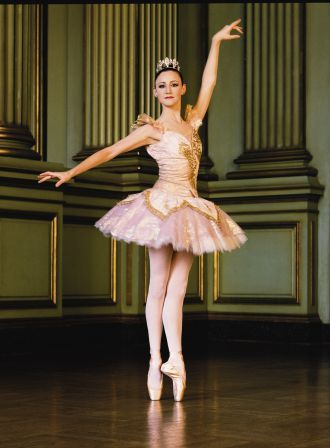
Diabetes Health, by Mary Milewski

Many little girls dream of someday becoming professional ballerinas, dancing with the grace of a swan, in the spotlight before thousands. Ballerina Zippora Karz, 35, is proof that diabetes doesn’t stop dreams and goals from being reached.

“If you have a love for something, diabetes will not stop you,” she said. “You need to put the care, effort and attention into it to take care of yourself-_and then you can do it.”

The recently retired ballerina looked back on her 16-year world-class career and recalled how she overcame the difficulties of managing both type 1 diabetes and a demanding career that kept her busy around the clock.

An Extraordinary Talent

Zippora started studying dance when she was 7, in her hometown of Northridge, California. By the time she was 15, the teachers noticed her extraordinary talent and helped Zippora make it to the New York City Ballet School of American Ballet. At 18, she was invited to join the New York City Ballet-one of the most prestigious ballet companies in the world.

Before Zippora even knew she had type 1 diabetes, she was dancing in demanding lead roles, including “The Nutcracker,” “Swan Lake,” “A Midsummer Night’s Dream,” “Apollo,” “Agon” and “Symphony in C.” Her career as a professional ballerina progressed from apprentice to becoming a member of corps de ballet. Zippora reached the ultimate goal when she was promoted to soloist with the New York City Ballet, touring the United States, Europe and Japan.

Along Comes Diabetes

It was during this busy period that Zippora started noticing symptoms of frequent urination and excessive thirst. She continued her daily routine: taking classes in the morning, rehearsing for six hours, going upstairs to put on make up and doing about three ballets.

At 21, however, Zippora was diagnosed with diabetes. She now had to fit the two extremes together in a carefully choreographed life routine.

“Life was so busy,” she said. “I really denied it at first. I was being pushed into a lot of solo and leading roles after just two years with the company. I had a lot of core roles, and at the same time a ballet was being choreographed by a director that would feature me.”

The difficult reality of taking daily insulin injections and blood sugar tests presented a stark contrast to her childhood ballerina dreams. But she soon realized that if she continued caring for her body she could do anything _ even live the fast-paced life of a famous ballerina.

“You do that every day,” said Zippora, who recently retired but has just as much passion now for teaching ballet. “It’s like a marathon runner, but it doesn’t just stop after one ballet.”

Zippora was willing to do whatever it took to help her body deal with its new situation so it would not affect her career.

“There was no way that anything was going to stop me from where I was headed in my career,” she recalls. “Everything in my life was focused on dancing.”

Testing Nine Times Per Day
Zippora’s daily routine changed to include blood sugar testing every hour or two:

9 a.m.-Wake up. Test. Take insulin, eat and get ready for morning dance class at 10:30.
10:30 a.m.-Another blood sugar test before class.
Noon to 6 p.m.-Rehearsal. Test every two hours, eat lunch and take insulin as needed.
6:30 p.m.-Test prior to applying make-up for the evening performance. Then off to warm-up for the performance at 7:30 p.m.
8 p.m.-Test 10 minutes before curtain.
11 p.m.-Performance is over. Test immediately after performance and take insulin.
1 a.m.-Test blood sugar and go to bed.

The key for Zippora was “not to have so many ups and downs” with blood sugar levels. In New York she lived with her grandmother, who had also been a professional dancer and loved health foods. Together they worked on meal planning.

To prevent hypoglycemia, Zippora learned to always carry dates, figs and bananas in her ballet bag. She always tested her blood sugar before performing to eliminate hypoglycemia while the curtains were open.

Success in Ballet and Diabetes Management

The key to being successful in ballet and diabetes management was testing blood sugars often, Zippora says. Keeping good control equaled feeling better for better dancing.

“The art of ballet is the delicacy of the way you use your toes, your hands and fingers,” she explains, “With every nuance you have to feel your whole body. If my blood sugars were off, it would interfere with that key to have that vital connection with my body.”

Diabetes didn’t slow Zippora down, even as she became a famous ballerina and was seen on the television show “Dance in America’s” broadcast of Balanchine’s “Western Symphony”. People came from all over the world to see her dance.

Nobody’s Perfect

Zippora’s blood sugars were not always perfect, but she tried not to blame herself. Her message to other people with diabetes is clear:
“You are only human and diabetes is very difficult. People shouldn’t feel like a failure if they can’t do it. The world is a difficult place, and there are high demands on people.”

For kids with diabetes, she offers this advice:
“Have compassion for yourself. Try not to get upset at your body for having this disease. That was my problem. I was mad at my body for trying to stop me from where I was headed in life. It’s a very difficult thing to be dealing with.”

Family support also helped her manage diabetes and dancing. Because her mother, grandmother and sister all danced, they were there to help.

“My father really was amazing,” Zippora said. “He’s a doctor. He helped me learn more about it. My mother was also incredibly supportive.”

Hanging up Her Ballet Shoes

Because of the rigorous workouts involved in dancing, Zippora decided to leave the New York City Ballet when she got injuries unrelated to diabetes.

“I wanted to leave while I was on top and absolutely loving it,” she said. “I’ve had such an amazing experience with this. Now I love teaching as much as I loved dancing.”

Zippora lead a “marathon schedule” doing what she loves for over 16 years. She now lives in Santa Fe, New Mexico, and teaches ballet for the George Balanchine Trust, staging works for major ballet companies.

“Looking back, I see I went down the road that was right for me. I’d never have taken that road if it were not for diabetes. In some ways, a limitation is a blessing in disguise.”

Zippora Karz has appeared with the New York City Ballet in the following productions:
Feature Roles
* Agon
* Apollo,
* Ballo Della Regina
* Coppelia
* Cotege Hongrois
* Divertimento No. 15
* The Four Temperaments
* Haieff Divertimento
* A Midsummer Night’s Dream
* The Nutcracker (”The Sugar Plum Fairy”)
* Swan Lake
* Valse-Fantasie

Other Roles
* The Concert
* The Goldberg Variations
* In G Minor
* Les Petits Riens
* Mozart Serenade

Diabetes Health, by Mary Milewski

I Hope You Can Dance, Tasty-Baby Website

Dancing was in my family. My grandmother danced a solo act in Vaudeville and my mother folk-danced. So, when my mother heard about an amazing ballet teacher in the San Fernando Valley near our home, she suggested we try it and I agreed to try ballet lessons. My teacher Sheila understood the technical as well as the artistic demands required to be a ballerina.

Sheila had always wanted to dance for George Balanchine but she had flat feet and couldn’t get en pointe, so she put all her passion into teaching. Her love was infectious and I fell in love with the experience of moving to music in a trained body. She was the one who knew I was suited for New York City Ballet and made sure I auditioned for their summer ballet program.

When I moved to New York everything changed. I had never really seen ballet growing up in LA. Now I was a student at the School of American Ballet (the official school of the NYC Ballet), and I was watching the legendary company founder, George Balanchine and his dancers every day and night. I was in awe.

I became a member of the New York City Ballet in 1984, sadly the year after Balanchine died. Just my second year in the company Peter Martins, then co-director with Jerome Robbins, singled me out to star as the Sugarplum Fairy in “the Nutcracker.” When “young ones” were picked out from the group it was a very big deal. The reviews hailed my partner, Peter Boal and I as “potential stars.”

The next year an even more amazing thing happened in my career, when Peter Martins chose me to be one of 8 up-and-coming dancers to be in his new production. I was ecstatic but frustrated with some strange things happening in my body. I was thirsty all the time, hungry, dizzy and “spaced out” and couldn’t stop peeing.

It was the end of a four-month-long winter season, performing every night. I was exhausted and I was under a tremendous amount of pressure with the premiere coming up. I thought my symptoms were the result of burn-out and I just needed to rest. What got me to the doctor were the sores under my arms that got so infected I couldn’t lift my arms. My precious premier was the next week and I had to be a beautiful ballerina with arms overhead. It was the threat to my performance that made me find out what was going on.

I went to the doctor, had blood work done and was told I had diabetes.

The immediate threat with insulin dependent diabetes is overshooting the insulin and having a hypoglycemic episode. Exercise works like insulin so when I was dancing all day the combined effect sent me shaking with lows all the time. Lows are far more dangerous than highs because you can go into insulin shock. The high blood sugars, on the other hand associated with diabetes cause symptoms that made it difficult for me to perform at my best.

Muscle pain was a big problem. Dancers are always in some kind of muscle distress from the constant work. We took class every day, rehearsed up to six hours and then performed.

A dancer needs to feel every part of his or her body, from fingertips to toes. When my blood sugars were off, even the slightest bit, I couldn’t feel that vital connection. I had taken such good care of my body and now I faced the threat of heart disease and stroke, blindness, kidney failure and leg and foot amputations. Not nice for a dancer to think about.

My journey took me inward. I spent many years asking myself why I was putting myself through the constant up and down struggle that came with trying to perfectly match my insulin doses with performing. I had many life threatening moments, and I was under enormous personal pressure to smile and present myself as having the “potential” everyone raved about.

Was I crazy? Was it worth it? I wanted to quit daily. But I’d force myself to give “just one more performance.” And in that performance I was reminded that yes, it was all worth it. Dance was my life, my true passion and purpose.

My struggle never let up. I committed myself to learning everything I could about how to manage my blood sugar levels, the best way to eat, and the best way to deal with my stress. With that my focus started to shift. I started to let go of my need to perform. Feeling good in my body off-stage as well as on became my goal. I had always been into health, but more for the sake of my life as a dancer. My focus switched to health for the sake of health.

Ironically, as I let go of my identity as a dancer, I was promoted to soloist (a ballet “rank” at which one dances featured and starring roles). I danced for another 7 years with the company, a sixteen-year career onstage. I loved every minute of it. But my heart had already made the turn, and I knew I wanted to give back. I didn’t know how, but I was ready to let go of performing.

I have become extremely active with many organizations dedicated to motivating and educating people – adults and children – to take care of themselves. I often do public speaking about the importance of good nutrition. I meet with groups of diabetics, share my personal story, my struggles and my commitment to taking care of myself, and I get them up and moving to music.

I work with numerous non-profits dedicated to the same message. I also stage Balanchine ballets around the world, as a repetiteur for the George Balanchine Trust. As a ballet teacher I also like to inspire dancers to be healthy and to take care of their bodies.

I think the greatest health challenge today is accessibility to junk; at home, at school, at corner stores. Good nutritious food is satisfying so there are fewer cravings, and healthy food can be just as sweet. But how many parents have the time, the education and the finances? Prepared food is easier and can be much cheaper.

I know for myself, when I eat something unhealthy, sweet or full of chemicals and additives it immediately triggers an addiction and I want more. I can’t stop. And I’m a disciplined dancer. I’m an educated adult with resources who can take the time and make the effort to find healthy alternatives. But most people – and therefore their kids – do not. I’d love to see healthy foods become common-place in our world.

The greatest benefit from my training, besides being able to follow a rigorous routine every day, was that I loved something. I had a passion so intense I would do anything to keep it. If our lives have meaning, we want to feel good. And that’s the greatest challenge for kids – finding meaning and passion in their lives.

Meet The Artist. Center Dance Arts, by Elizabeth Hirsch

I will always remember my first encounter with Zippora Karz. It was a breathtaking photograph of the beautiful ballerina. She was poised in mid-air in a classic dance expression realized from years of formal training with the New York City Ballet. Ever since, I had imagined Zippora as larger than life. And that she is, but in ways unimagined, and wonderfully refreshing.

As events co-chair, I get an early glimpse into CDA member events and was excitedly anticipating the evening with Zippora. Jane Jelenko, President of CDA, had told me how special and inspirational this dancer is, but I was still surprised by her free spirit, open heart, and the depth of both her humanity and artistry.

Arriving at the lovely home of our hosts, Gwen and Brian Potiker, I headed to greet fellow dance lovers and noticed a young woman dressed in an understated black sweater and trousers sitting on the couch, and wondered who she was. Moments later I was introduced to the lovely Zippora Karz. The contrast between her picture in mid-air and the youthful, unpretentious woman before me was stunning.

Zippora and I hit it off immediately. We walked into the sunroom to take pictures for CDA archives, and she confided she needed photographs for a magazine cover on which she was to appear, and asked me to take pictures of her with my new camera. Zippora sat, stood, and moved her arms as my shutter captured the first 15 minutes of our acquaintance. I loved Zippora’s uncanny nature and free spirit. The next day we began to correspond and still do.

The group settled into Gwen and Brian’s living room and Zippora told us about her life as a dancer. The backdrop of her youth was a broken home and her early years were filled with challenges. Zippora found her soul and the joy in life when she dances, and like the song, “everything was beautiful at the ballet!”

Zippora’s teacher encouraged her to study dance seriously and helped her navigate the auditions that resulted in her acceptance to the American School of Ballet. She left Los Angeles for New York City to find herself among her true peer group, and finally a home. She had no idea it was possible to become a professional dancer, but with the dawning and realization of this truth at the American School of Ballet, her life course was set to dance with the New York City Ballet.

Just as she began to perform, juvenile diabetes struck when Zippora was 21 years old. Over six challenging years she learned how to manage the debilitating illness relying not upon training, but upon her own natural voice, her courage, dogged determination, and deep love for dance. Throughout this struggle, Zippora continued to perform with the New York City Ballet and became a principal ballerina.

Zippora is a dedicated teacher, committed to the ongoing legacy of George Ballanchine. Her personal journey through the world of professional dance, and her battle with juvenile diabetes formed the core of her discussion with the group. She is an engaging and persuasive spokesperson in the fight against juvenile diabetes and in her ongoing work to preserve the Ballanchine ballets through the Ballanchine Trust.

Disdaining tutus, Zippora loves to dance in free flowing, natural garb. Everything about Zippora is natural and from the heart, unlike many dancers who appear disciplined, focused and contained upon first meetings. Zippora breaks the mold. She is a free spirit who shares her passion, love, struggles, beliefs, fears, and vulnerability openly and joyously and with complete abandon.

The natural conclusion to our CDA question and answer periods with artists is usually welcomed by the audience after an hour of conversation. After three calls by the moderator for closure, our night with Zippora Karz arrived at its natural conclusion. To be continued.